We live in a fractured and uncertain world, often marked by wars, anxiety, and hopelessness. In a society characterized by rising fuel and food prices, noisy shopping centres, and relentless negative news, many people who endure the pressures of a competitive, corporate urban lifestyle long for a safe, wholesome refuge – a place where life feels quiet, peaceful, and whole again.
For this reason, many seek solace in nature reserves, go camping, or embark on hikes in natural surroundings – places that still appear untouched, with a sense of harmony. In these spaces, the world feels unspoiled, offering relief from the turmoil of a materialistic, performance-driven society.
Such experiences are often described as “recharging one’s batteries,” and there is truth in this metaphor. Nature does indeed have a healing effect on us. Yet, this sense of renewal is fleeting and cannot provide a lasting solution, because we are not merely observers of the brokenness around us; we are also participants in it. The inner burdens and unresolved issues we carry within us do not disappear simply because we are surrounded by serene landscapes. They may be temporarily softened, but they still remain.
Even the church is no longer widely seen as a sanctuary of security and peace any more. For many, religion has faded from everyday conversation and no longer plays a meaningful role in their lives. This disengagement does not necessarily stem from atheism; many still hold a deep respect for God. This raises two questions: Has the church become irrelevant, failing to fulfil its God -given calling? And, are our efforts to escape from the busyness of city life and the noise of social media by retreating into distant, tranquil places the answer to our innermost longings?
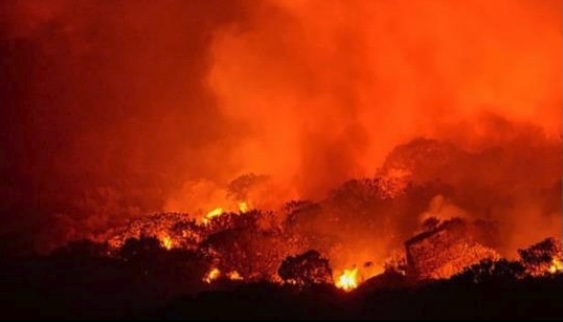
During a recent weekend hike with fellow hikers, I noticed dark smoke rising in the distance – a sign that healthy fynbos was once again being destroyed prematurely by raging bushfires. This saddened me deeply, as my aim was to find refuge in the tranquillity and wholeness of nature.
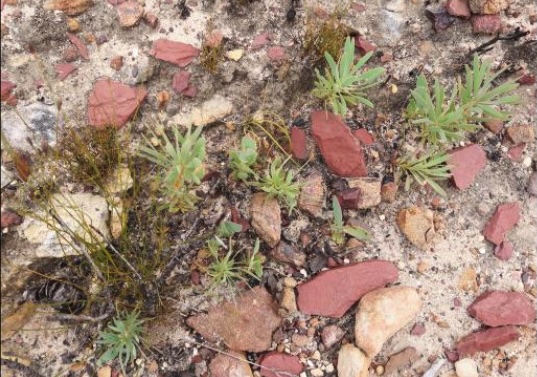
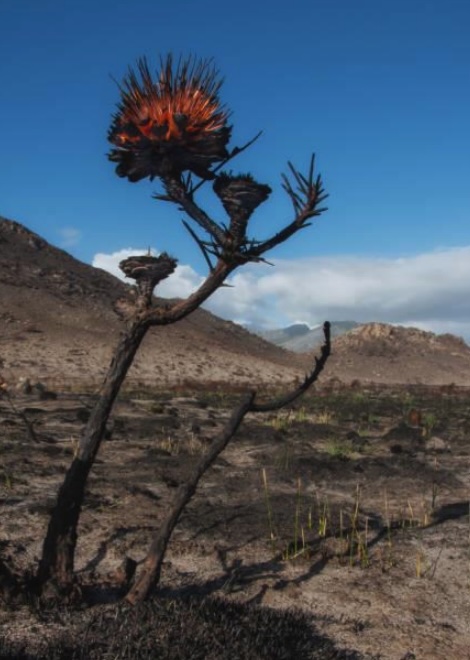
However, sometime later, I spotted young, healthy protea seedlings emerging from the scorched earth – remnants from the fires of the previous year. This gave me hope and lifted my spirits. I saw this as a metaphor: both destruction and renewal are interwoven. This realization filled me with new hope.
After giving it some thought, the coexistence of destruction and rebirth reminded me that it is an illusion to think we can escape to a world of total perfection. Our dualistic reality paints a more complex picture. The church’s calling, therefore, is not to promise an escape from a fallen world, but to proclaim that, even within it, we can be healed and made whole by the One who created the universe – and each one of us.
The negative experiences that engulf us are ultimately overshadowed by a divine, eternal “YES” that applies to each of us. For me, the fynbos experience, where I witnessed both destruction and the rebirth of new life, embodies our
Christian reality: we are both sinful and justified – broken, yet reconciled; still in tension, but held and embraced by God’s loving grace.
Ernst-G. Brunke.